Department of Physics and Astronomy
University of Rochester
Rochester, NY, 14627-0171, USA
Office Phone: (1)585-275-0537
Office: Bausch and Lomb Building, Room 417
Postdoctoral Fellowships: Caltech (1998-1999); Cambridge (1995-1998)
PhD.(Theoretical Astrophysics) Harvard (1995)
M.A.S. (Part III Applied Mathematics & Theoretical Physics Tripos): Cambridge (1991)
S.B. (Physics); S.B. (Mathematics) MIT (1990)
Research Style and Interests
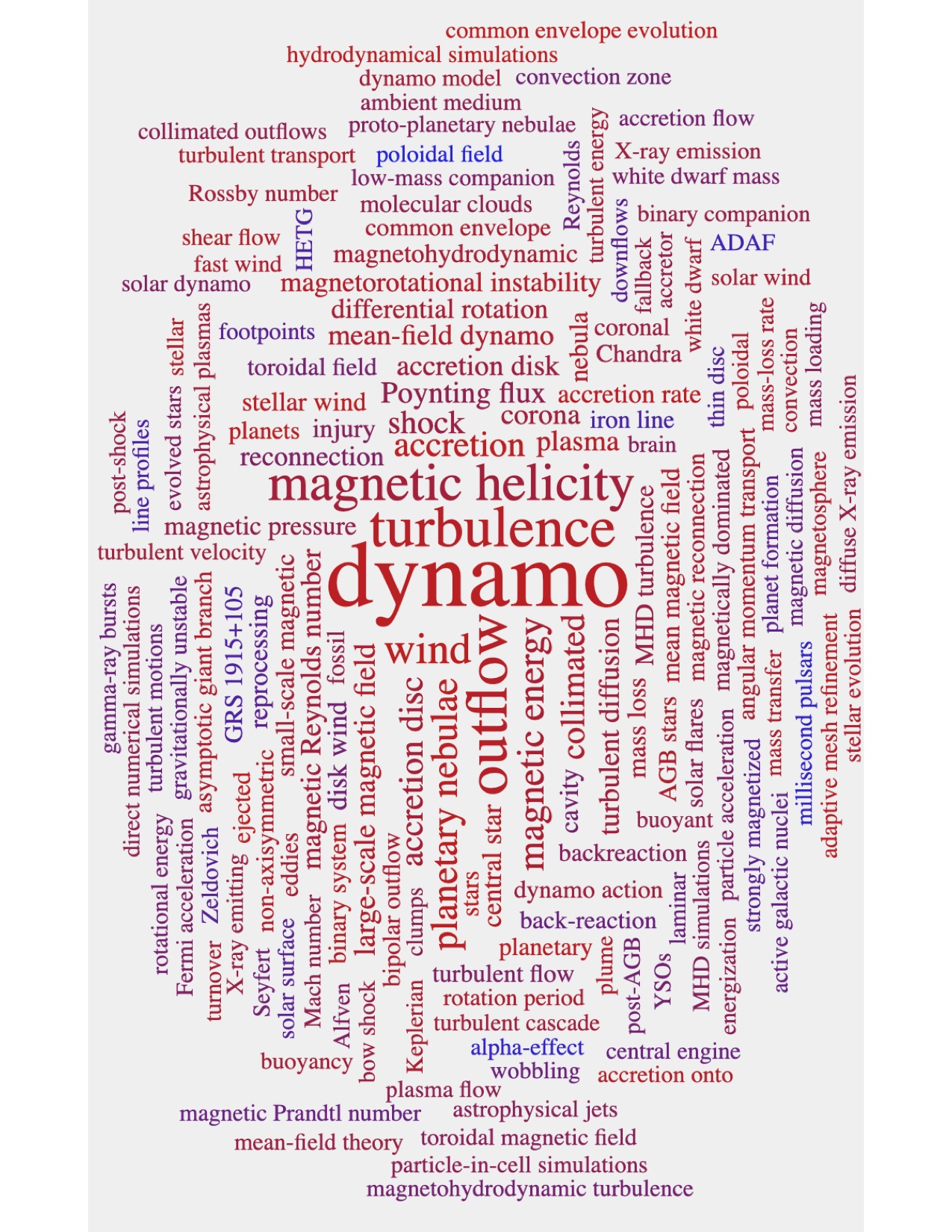
My research spans a range of problems in theoretical astrophysics
and has recently included excursions into planetary physics and geophysics.
I have also worked on the physics of brain injury and helmet protection. The work that I do by myself is primarily analytical or semi-analytical theory, but I collaborate with computational simulators, observers, and experimentalists in additon to other analytic theorists. I prefer working on projects that identify "first order" principles rather than "higher order" details. This can mean working in a subfield for which the basic questions are still being formulated and may not yet have reached popularity. Alternatively, this can mean examining long standing puzzles and assumptions in a new way.
I am a "player-coach" of theoretical astrophysics and physics. That is, I maintain a steady subset of projects for which I myself do the primary calculations, interpretation, and writing.
I also have projects for which I supervise and advise others, contributing at different levels depending on the project and the collbaoration team. I often think about the analogy with sports, and particularly the distinction between coaching and playing. For me, coaching alone does not provide sufficient exercise.
Astrophysical fluid dynamics and plasma astrophysics underlie much of my research. These pertain to
a variety of different contexts including the interplanetary medium, the sun, stars, galaxies, active galactic nuclei (AGN), and planetary nebulae
to name a handful
I also have my eyes open for interesting
interdisciplinary projects that benefit from physics thinking.
This has included work on the physics of mitigating traumatic brain injury.
Places
Some places where I've enjoyed productive time
Past/Present research collaborators at U. Rochester as undergraduate researchers, graduates students, or postdocs
(click on names to find out more about them)
as Undergraduate Research Students (home undergraduate instituion in parentheses)
Yinqi Fang (U. Rochester);
Wen-Fei Fong (MIT);
Sean Hartnoll (Cambridge);
Scott Lucchini (U. Rochester);
Fiona Nichols-Fleming (U. Rochester);
Robert Penna (U. Rochester);
Bo Peng (U. Rochester);
Ryan Pettibone (U. Rochester);
Daniel Pfeffer (Case Western Reserve U.) ;
Robert Siller (U. Rochester);
Yisheng Tu (U. Rochester);
Scott Verbridge (U. Rochester);
Lauren Weiss (Harvard);
William Wolf (Eastern Illinois U.);
Karen Xu (U. Rochester);
as Graduate Students
Ananya Mohapatra
;
Shubhonkar Paramanick
;
Ketevan Kotoroshvili
;
Atma Anand
;
Hongzhe Zhou
;
Zhuo Chen
;
Farrukh Nauman
;
Shule Li
;
Kiwan Park
;
Jaehong Park
;
Jonathan Carroll-Nellenback
;
Alex Hubbard ;
Jason Nordhaus;
Alexei Poludnenko
;
Tom Gardiner
;
Rob Selkowitz
;
as Postdoctoral Scholars
Victor Lherm
;
Luke Chamandy
;
Jared Workman
;
Martin Huarte-Espinosa
;
Joachim Moortgat
;
Richard Edgar
;
Jason Maron
;
Gunnar Paesold;
Vladimir Pariev;
Peggy Varnière
as Visiting Scientist Affiliates
Maxim Lyutikov
Courses
 https://orcid.org/0000-0002-9405-8435